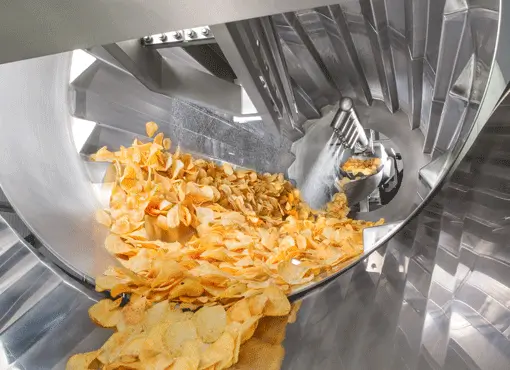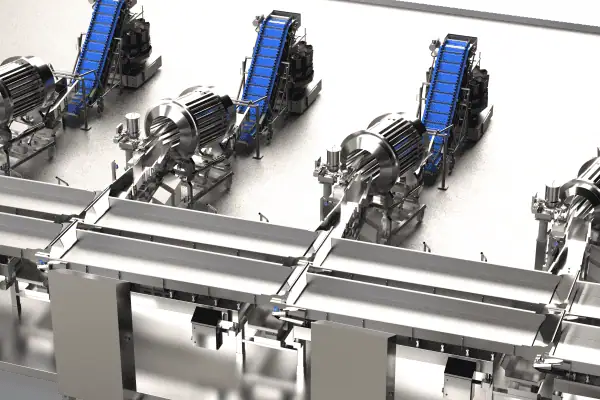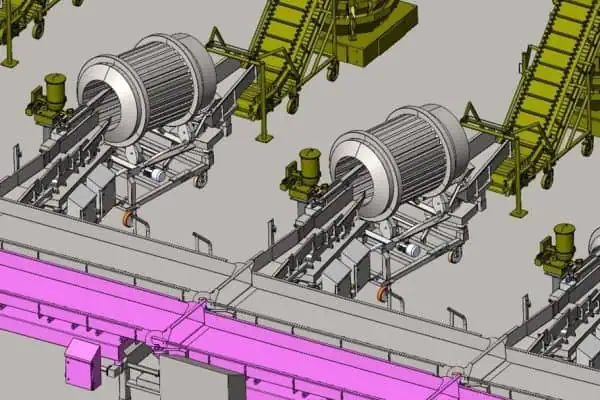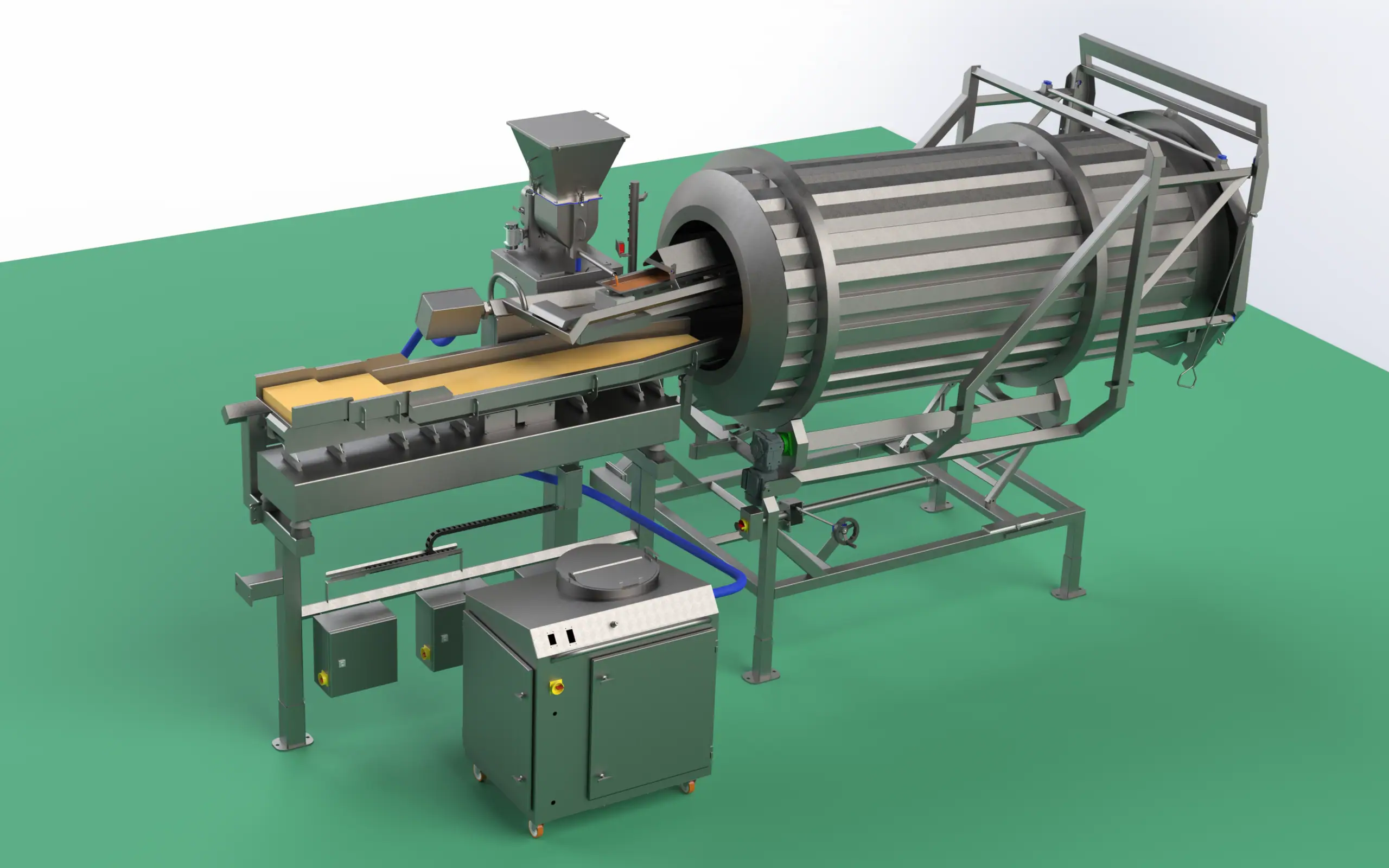
Specifying a seasoning system for a new snack food line, or replacing one on an existing line, is a decision that will affect product quality, operating costs, and production flexibility for years to come. It is not simply a case of choosing a flavour drum. The seasoning system is a collection of machines and controls that must work together, and the specification needs to reflect the full picture.
This guide covers the key considerations that engineers and production managers should work through when specifying a seasoning system.
Start With the Product, Not the Equipment
The most common mistake in specifying a seasoning system is starting with the equipment rather than the product. Every product behaves differently in a seasoning drum. Crisps, tortilla chips, extruded puffs, nuts, and pellets all have different shapes, weights, surface textures, and fragility levels. A system that works perfectly for one product may perform poorly with another.
Before looking at any equipment, define the products you need to season, their throughput rates, the seasoning types you will use (dry powder, oil, slurry, or combinations), and the target application rates. This information will determine everything that follows.
Throughput and Line Speed
The seasoning system must match the throughput of the line it sits within. Under specifying the capacity leads to bottlenecks, while over specifying wastes capital. Consider not just the current production rate but any planned increases. A system that runs at 90% capacity on day one leaves no room for growth without a costly upgrade.
It is also worth considering whether the line runs continuously or in batches, and whether there are peak periods where throughput needs to increase temporarily. The system should be able to handle these variations without compromising accuracy.
Dosing Method
As discussed in our article on seasoning accuracy, the choice between volumetric and gravimetric dosing has a significant impact on consistency and waste. For most snack food applications, gravimetric dosing offers better accuracy and pays for itself through reduced seasoning waste.
If you are running multiple flavours with different powder characteristics, gravimetric systems handle the variation much better than volumetric ones, which may need recalibration each time you change flavour.
Flavour Changeover Requirements
If your line runs multiple flavours, changeover time becomes a critical factor. Every minute spent cleaning between flavours is a minute of lost production. Some seasoning systems are designed with quick release fittings, tool free access panels, and smooth internal surfaces that make cleaning faster and more thorough.
Consider how many flavour changes you do per shift, how long they currently take, and what that downtime costs you. A system that takes 20 minutes to change over versus one that takes 45 minutes can save hundreds of hours of production time per year.
Allergen Management
Allergen cross contamination is a growing concern for snack food manufacturers. If your line handles products with different allergen profiles, the seasoning system must be designed for thorough, verifiable cleaning between runs. This means smooth welds, no dead spots where residue can accumulate, easy access to all product contact surfaces, and ideally a design that allows visual inspection of every area.
Some manufacturers choose to run dedicated seasoning systems for different allergen groups, while others invest in systems that can be cleaned to a validated standard between runs. The right approach depends on your product range and your risk tolerance.
Integration With the Rest of the Line
A seasoning system does not operate in isolation. It receives product from upstream conveyors and feeds it to downstream weighers and packing machines. The specification should consider how the system connects to the rest of the line, both physically and in terms of controls.
Ideally, the seasoning system should communicate with the upstream process to regulate product flow and with the downstream equipment to respond to stoppages or slowdowns. This level of integration prevents product buildup, reduces waste during line interruptions, and keeps the whole line running smoothly.
Controls and Data
Modern seasoning systems can capture a wealth of data: application rates, seasoning usage, line speed, changeover times, and more. This data is valuable for quality assurance, cost control, and continuous improvement. When specifying a system, consider what data you need, how it will be captured, and how it will integrate with your existing factory systems.
Look for control systems that allow recipe storage, so operators can switch between flavours with a single selection rather than manually adjusting settings each time. This reduces human error and speeds up changeovers.
Support and Spare Parts
Finally, consider the long term relationship with the equipment supplier. A seasoning system will be in service for many years, and during that time you will need spare parts, technical support, and potentially upgrades. Choose a supplier who can offer ongoing support, holds spare parts in stock, and has the expertise to help you optimise your system as your needs change.